Contact: 15306697779
Email: 150256700@qq.com
Address: No. 666, The Western Corner, Kangling Village, Xikou Town, Fenghua District, Ningbo City, Zhejiang Province
Website: http://www.haofayy.com
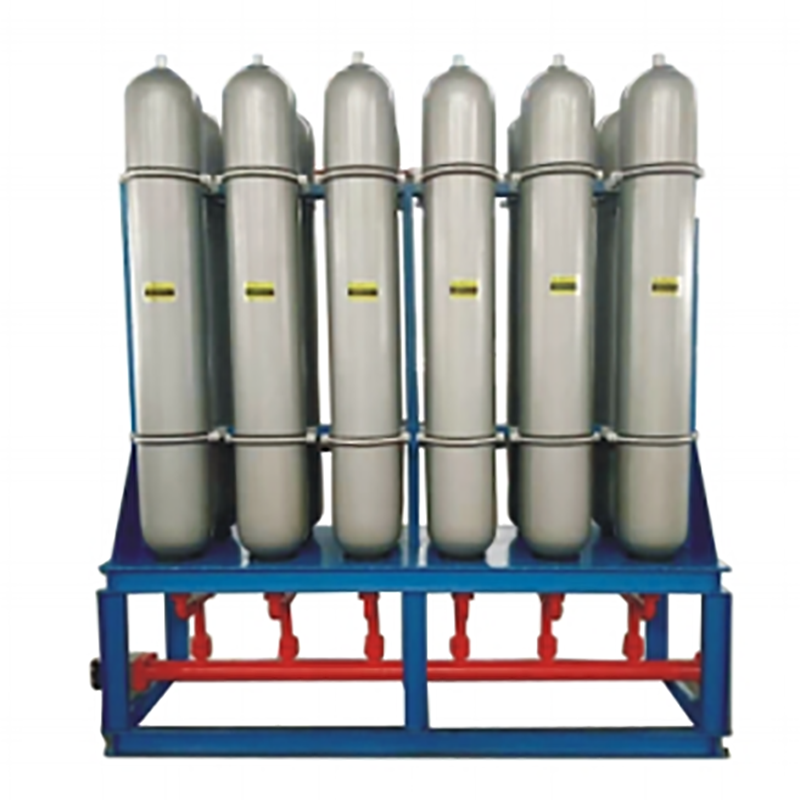
The accumulator shell system uses seamless steel pipes with both ends hot-swaged to form a shell approximating a hemisphere, with the middle section serving as a seamless container with a circular shell structure. This utility model is integrally connected with the bladder, fixing a standard QXF-5 charging valve to the small end of the shell with a round nut, and installing an oil inlet valve on the large end of the shell, placing the pear-shaped bladder on the valve seat. A spring-loaded mushroom valve is installed on the oil inlet valve to prevent the bladder from being squeezed and damaged when the bladder is filled with gas or the hydraulic oil (liquid) in the accumulator is completely discharged. During operation, the mushroom valve opens under the action of the spring, allowing hydraulic oil (liquid) to flow in and out. The accumulator shell is divided into two chambers by the bladder; the accumulator shell is charged with nitrogen gas via the bladder, and the accumulator shell is filled with liquid. During the process where the liquid pump fills high-pressure hydraulic oil (liquid), the accumulator shell deforms, and the gas volume decreases as the pressure increases. This liquid is stored. If a hydraulic system needs pressure oil (liquid) for replenishment, and its pressure is lower than the pressure of the hydraulic oil (liquid) stored in the accumulator, the hydraulic oil (liquid) is discharged into the hydraulic system by the supply valve under the pressure of gas expansion; until the pressure drops to match the pressure within the system. A shut-off valve is installed on the oil passage between the oil inlet and the reservoir, and a pressure gauge is installed in front of the shut-off valve. Slowly open the shut-off valve to return the pressure oil to the tank. The pointer of the pressure gauge drops slowly, and after reaching a certain pressure value, it rapidly drops to zero; the reading at this position is the charging pressure. Additionally, a charging tool can be used to directly check the charging pressure, but since some gas is released with each check, this method is not suitable for accumulators with small capacity. If the reservoir is not working in the hydraulic system, check for air leaks; if found, replenish with nitrogen. If there is no nitrogen in the bladder and oil spurts from the gas valve, remove and check if the bladder is damaged. If the accumulator leaks oil, tighten the joints. If there is still an oil leak, replace the faulty parts. Before unloading the accumulator, the pressure oil must first be unloaded (using a bypass valve or other control valves in the system). Then release the nitrogen from the bladder, and dismantle the accumulator from the pipeline, taking care not to damage the accumulator.