

Contact: 15306697779
Email: 150256700@qq.com
Address: No. 666, The Western Corner, Kangling Village, Xikou Town, Fenghua District, Ningbo City, Zhejiang Province
Website: http://www.haofayy.com
The installation and maintenance of stainless steel accumulators mainly cover the installation and repair of accumulators, troubleshooting and elimination, and repairs. Accumulator installation includes pre-installation inspection, installation, and nitrogen charging. Accurate installation stability and gas charging are the main prerequisites for the normal use of the accumulator and the exertion of its functions. The measurement of specifications and the accurate use of common instruments and meters should not be neglected.
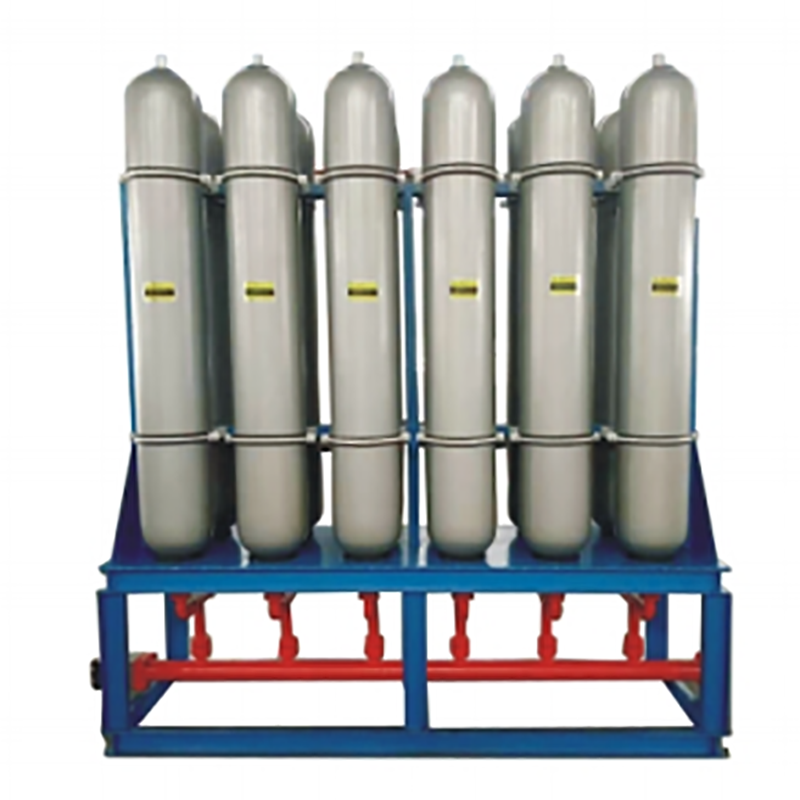
Accumulators must prevent leakage during use; the bladder should be regularly inspected for airtightness and other aspects. Therefore, routine inspections and regular maintenance are indispensable. Routine inspection uses simple methods such as visual inspection, hearing, touch, and instruments to inspect the appearance and status, paying attention to the entire machine. For emergencies encountered during inspection, emergency treatment should be carried out for issues hindering the accumulator's continued operation; others should be carefully noted and recorded to be resolved during regular maintenance. Many damaged structural parts should also be replaced as soon as possible. Proactive maintenance is a new equipment management concept proposed globally following breakdown maintenance, preventive maintenance, and condition-based maintenance. Its understanding is: to repair the essential specifications causing machine damage, thereby effectively preventing failures and extending the machine's life. Proactive maintenance is a measure taken against the essential condition of the machine before it breaks down, effectively controlling breakdowns and failures, thereby drastically extending the repair cycle. Proactive maintenance not only provides a guarantee for equipment and components but also reduces maintenance costs.
Accumulators are dangerous components in hydraulic cylinders, so special attention to safety is required during operation. Accumulator troubleshooting and elimination cover both the inspection and elimination of the accumulator's own mechanical faults and the troubleshooting and elimination of the hydraulic cylinder where the accumulator is located; the two are interrelated. The main workflow for troubleshooting is: ① Determine the nature and severity of the fault. Based on the site conditions, determine if there is a fault, what it is, the nature of the phenomenon (pressure, strength, action, or others), and the severity of the phenomenon (normal, minor fault, general fault, or serious fault). ② Find the failed component and location. Based on the symptoms and detailed data, find the fault point, trying to eliminate it as much as possible, focusing here on "where the problem is". ③ Further find the initial factors causing the fault. Such as hydraulic oil contamination, low component safety, hazards not meeting requirements, etc. Focus here on the external factors of the fault. ④ Mechanism research. Conduct a more in-depth study and analysis of the fault's correlation chain to clarify the cause of the problem. ⑤ Predict the fault development process. Based on the current intensity of system wear and tear, component life concepts, and empirical data, predict the future status of the accumulator or hydraulic cylinder. Research, compare, analyze, classify, and synthesize to find patterns.


